What Watt Power Bank Do You Need? 10W–100W Guide
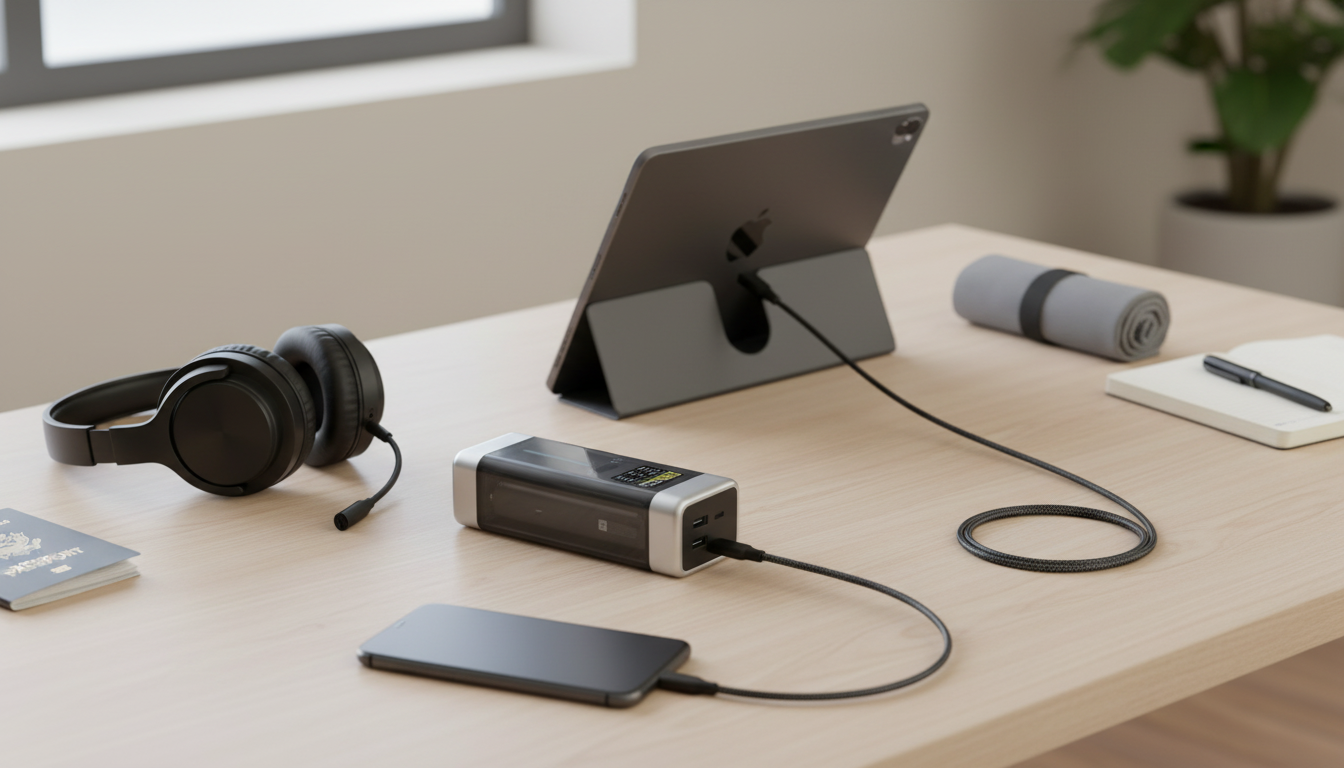
How much W power bank is good?
A good watt (W) rating for a power bank depends on what you need to charge. Wattage describes the maximum power the bank can deliver at one time (watts = volts × amps). Higher wattage can charge larger devices faster and can support laptops, while lower wattage is fine for phones and accessories.
Good wattage for everyday phone charging
For most phones, a power bank that can output 10W to 20W is a solid pick. Around 12W works for basic charging, while 18W–20W typically supports fast charging on many popular models (when paired with the right cable and protocol).
Good wattage for tablets and multi-device use
If you regularly charge a tablet or want faster top-ups while using the device, look for 20W to 30W output. This range is also helpful when charging two devices at once, since the total available power may be split across ports.
Good wattage for laptops and USB-C Power Delivery
For laptops, aim higher: 45W is a common “works for many” level for smaller USB-C laptops, while 60W–65W is safer for broader compatibility. Some larger laptops may require 90W–100W to charge reliably (or to charge while in use). Always compare the bank’s USB-C PD output rating to your laptop charger’s wattage.
What else matters besides watts?
Wattage is only part of the decision. Capacity (mAh/Wh), USB-C PD support, port selection, and the included cable can change real-world performance. Also note that airlines commonly limit power banks to 100Wh for carry-on, so very high-capacity models can have travel restrictions.
For a deeper breakdown of wattage, device matching, and practical buying tips, visit https://technologygalaxy.shop/how-much-w-power-bank-is-good/.
FAQ
Is a 20,000mAh power bank enough for a day trip?
For most people, yes. A 20,000mAh bank typically delivers a few full phone charges (less after conversion losses) and can also top up earbuds or a smartwatch, making it a reliable day-trip capacity.






Leave a comment